Protective Wrap Machine and Sustainable Product Design

Feb 2024 – Jun 2024 University of Southern Denmark
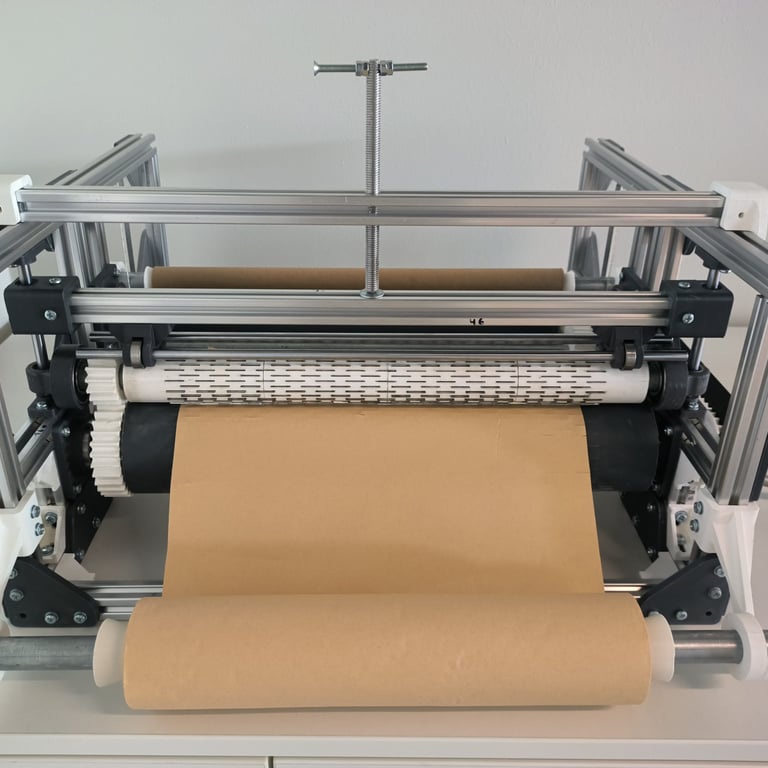
At the University of Southern Denmark, the Protective Wrap Machine project highlights how engineering solutions can be both practical and environmentally responsible. This project demonstrates how eco-conscious design principles reduce waste, improve efficiency, and provide alternatives to traditional plastic packaging.
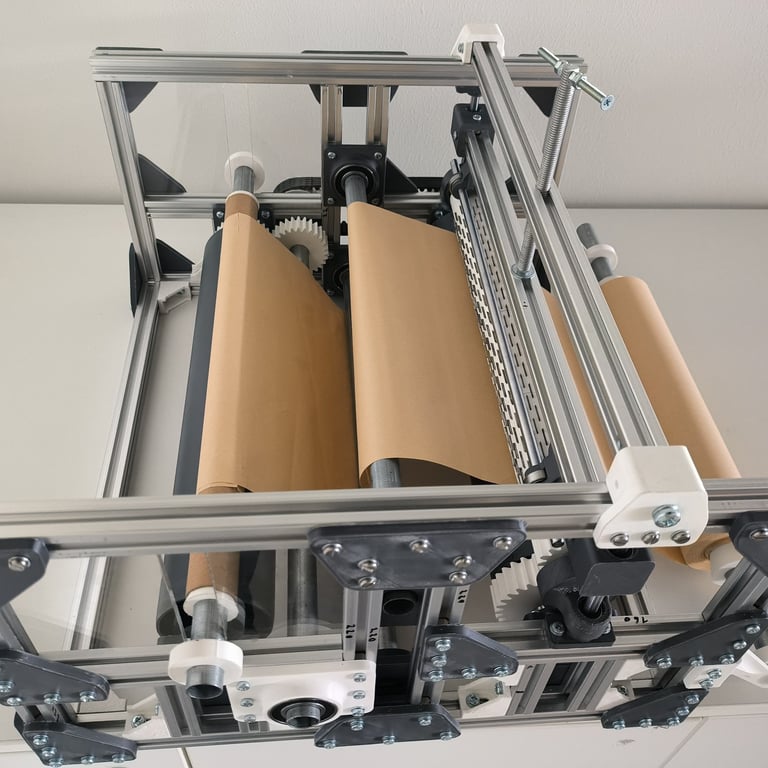
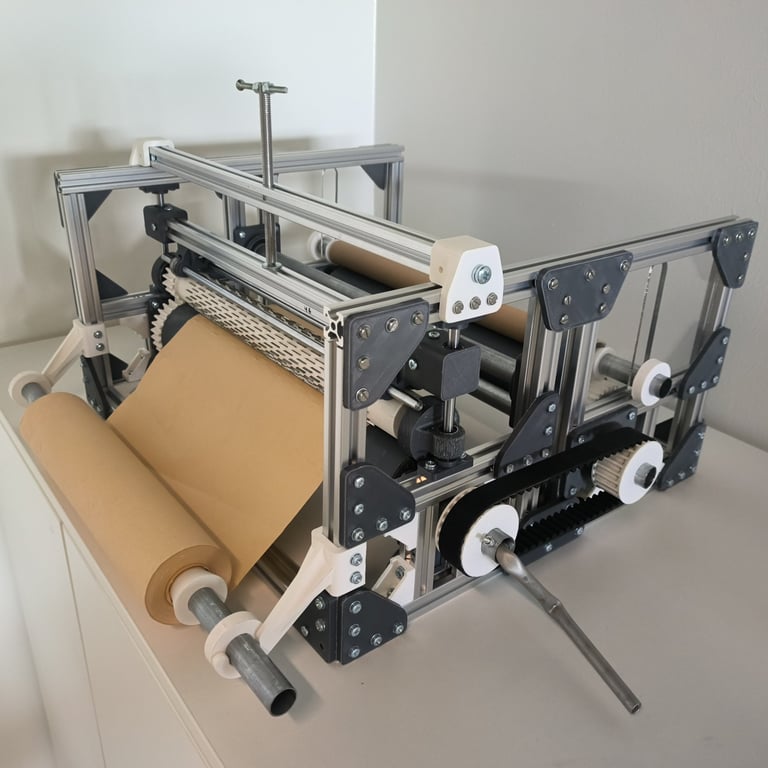
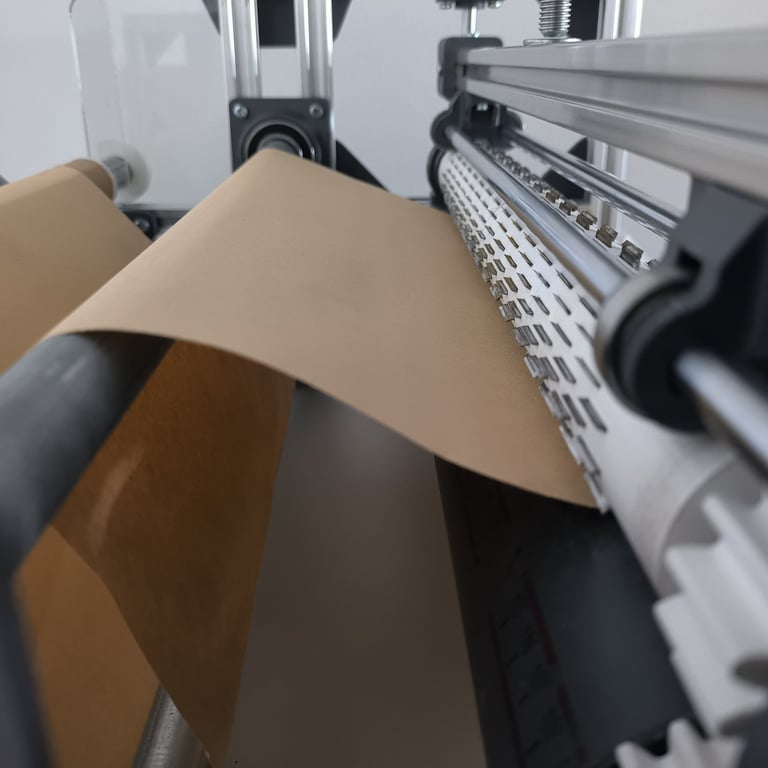
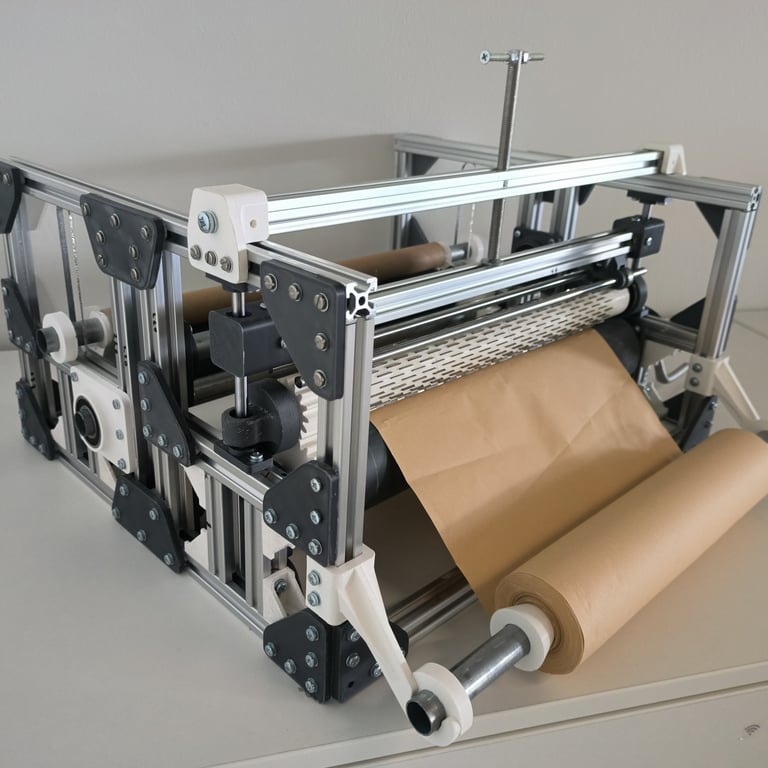
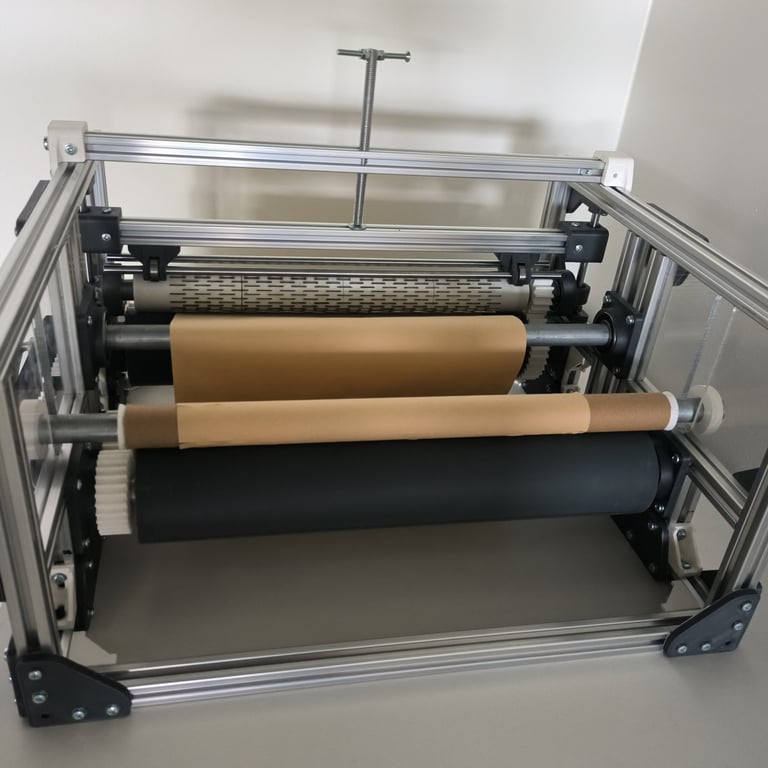
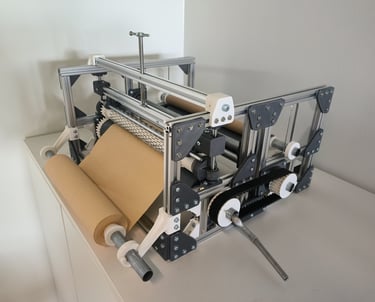
The aim was straightforward: create a compact, fully mechanical machine that could transform kraft paper rolls into protective wrapping material for small and medium-sized enterprises (SMEs). Unlike conventional packaging machines that often rely on plastics and energy-intensive systems, this prototype prioritizes sustainability at its core. Kraft paper was selected for its renewable and recyclable properties, offering an effective replacement for single-use plastics.
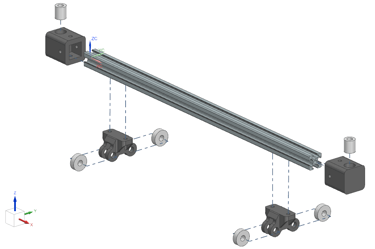
The design process combined intensive CAD modeling in Siemens NX with iterative prototyping through 3D printing. This approach allowed the integration of both custom and standardized components, making the machine scalable and adaptable. A key focus was simplicity—ensuring that the machine remained cost-effective, reliable, and required zero energy consumption. Through this design philosophy, the project successfully produced a functional prototype that reflected the balance of sustainability, performance, and practicality.


Sustainable product design is transforming the way mechanical engineers approach innovation
Key achievements of the project include:
Efficient material use by replacing plastic with kraft paper.
Energy efficiency through a fully mechanical design with no external power.
Cost-effectiveness via lean, replicable construction
Reliability supported by straightforward mechanics and durable components.
In addition to the technical success, the Protective Wrap Machine illustrates how sustainability can be embedded in every stage of development. From the earliest sketches to the functional prototype, decisions were guided by environmental responsibility as much as mechanical performance. This balance ensured that the machine could meet real-world needs while setting a higher standard for eco-conscious engineering.
For mechanical engineers, recruiters, and companies, the Protective Wrap Machine offers a clear case study of sustainable product design in action. It illustrates how environmentally responsible choices can be embedded into the earliest stages of development without compromising usability or affordability. As industries adapt to stricter regulations and increasing consumer demand for sustainable solutions, projects like this serve as a roadmap for future innovation—where engineering ingenuity and environmental responsibility work hand in hand.